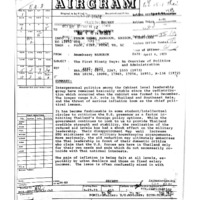
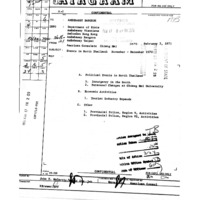
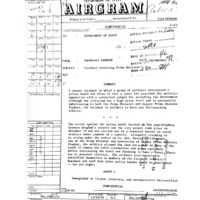
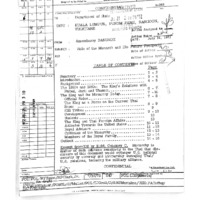
Role of the monarch and his future prospects
Dublin Core
Subject
Description
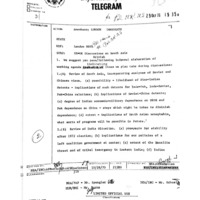
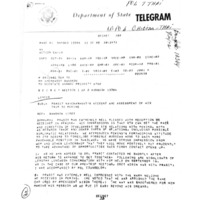
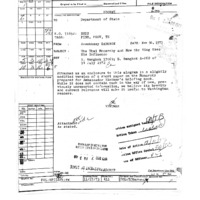
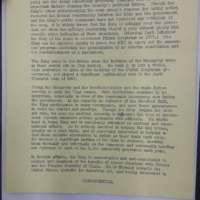
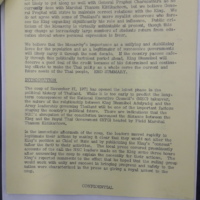
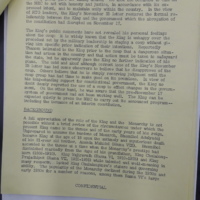
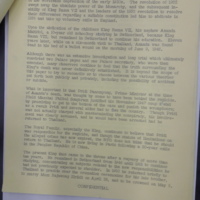
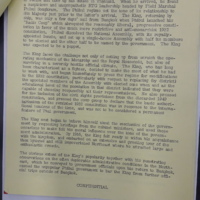
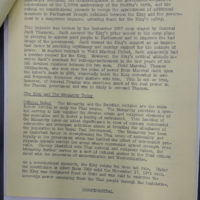
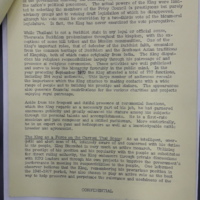
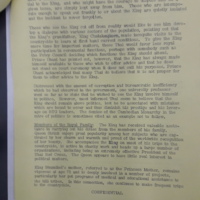
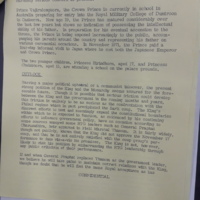
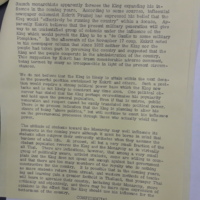
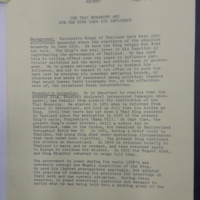
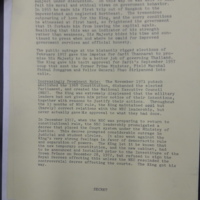
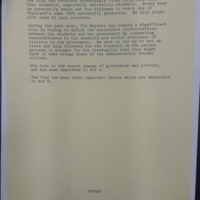
Though it is too early to assess the long-range consequences of the National Executive Council's (NEC) November 17, 1971 takeover of power, the nature of the relationship between King Bhumibol Adulyadej and the Army leadership governing Thailand will be one of the important factors shaping the country's political future. Though the King's letter acknowledging the coup group's reasons for taking action restored the formal relationship between the King and the government, and the King's public comments have not contained any criticism of the coup, it is widely known that the King is unhappy over the precedent set when the military leadership staged a coup without giving him specific prior indication of their intentions. (Marshal Sarit informed the King of his plans to overthrow Phibul Songkram in 1957.) The King can be expected quietly to press the NEC to carry out its announced program--including the promulgation of an interim constitution and the reestablishment of a parliament.
Source
Publisher
Date
Rights
Language
Type
Identifier
Date Created
2022-07-30
Access Rights
This is an open access document. You are free to Share and Use under the terms of the Creative commons license.
Extent
19 leaves
Rights Holder
Chulachomklao Royal Military Academy
Files
Collection
Citation
United States. Embassy (Thailand), “Role of the monarch and his future prospects,” ระบบหอจดหมายเหตุต่างประเทศ ทูลกระหม่อมอาจารย์, accessed November 17, 2026, https://archives.nrct.go.th/histdept/items/show/412.
Position: 56 (506 views)
Related Items you might want to check out...